
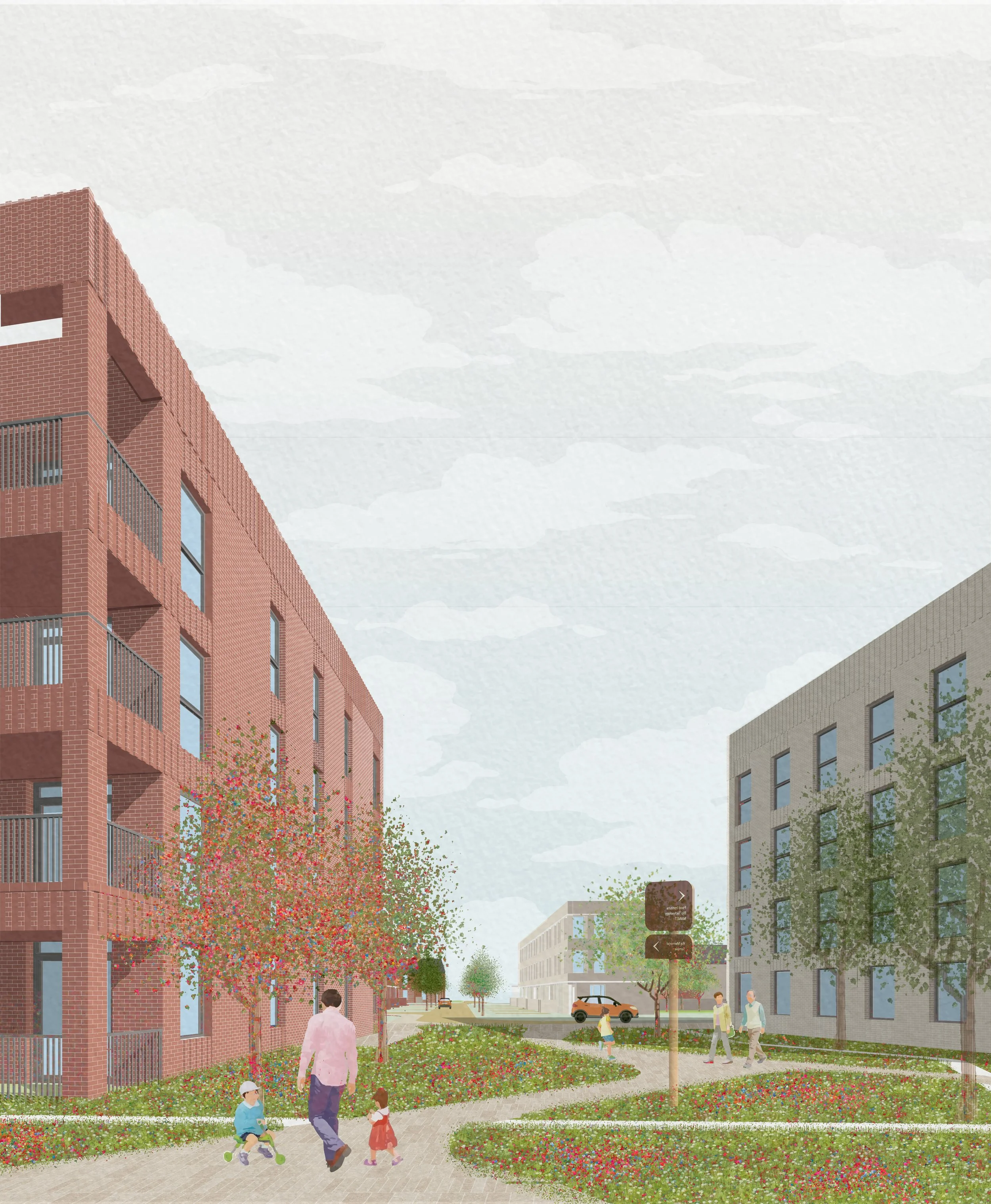
Excalibur estate - phase 2
Client : London & Quadrant Construction
Location : Catford, Lewisham
Completion date : TBC
Services: RIBA Stages 1-3
Excalibur Estate represents a forward looking opportunity to deliver a neighbourhood shaped by care, heritage and community purpose. In partnership with London and Quadrant, the final phase of this regeneration continues to focus on high quality homes supported by placemaking principles that reflect the needs and character of Catford and the wider Lewisham area.
Engagement with local residents has been central to the development of the design. The surrounding area is a haven for young families, supported by strong schools, community centres and local networks. This context has informed a scheme that prioritises safe, welcoming streets and everyday places where families can grow and succeed.
At the heart of the plan is a new north to south street known as Home Lane. This calmer route is designed to create a distinctly pedestrian focused environment. It provides space for children to scoot, neighbours to greet one another, and planting to soften the edges of the public realm. Home Lane also establishes a direct link between the new homes and the southern footpath, guiding families towards Forster Memorial Park, its playground, sensory garden and café. The landscape strategy prioritises people over vehicles and introduces a sequence of small, green spaces that enrich daily life.
The wider character of this part of Catford is shaped by the ordered rhythm of the Corbett Estate and the distinctive presence of the original prefab homes. The design respects both. The figure ground pattern of the original architect has informed the organisation of longer terraces along the site perimeter, providing a meaningful dialogue with existing rear gardens. Towards the centre, the building heights step up to meet the main route that connects with earlier phases.
A line of original prefab homes remains part of the southern street, representing a living memory of post war optimism and community resilience. Rather than concealing this history, the proposal celebrates it. The Southern Street becomes a place of unique character supported by softer materials, sensitive planting and design cues that respect its heritage. Materials around the listed bungalows are selected to acknowledge their significance while offering a clear but harmonious contrast with the new buildings.
Nature is carefully woven back into the estate. The existing site contains mature, self seeded greenery and informal habitat. The design reintroduces this richness through layered landscapes that include pocket parks, doorstep play and playful routes. These elements extend nature to the threshold of every home and strengthen the biodiversity of the neighbourhood. Play on the way spaces are integrated where appropriate to support active, child friendly movement across the site.
The regeneration is rooted in the character of a diverse and multicultural community, many of whom experience economic and social pressures. The placemaking approach responds with thoughtful ambition. Homes are designed to be simple, robust and enduring. Materials are chosen for warmth, texture and individuality, reflecting the richness of the people who live here rather than applying a generic aesthetic. Communal spaces are welcoming and open, with opportunities for residents to contribute to their long term stewardship. Streets are positioned to maximise sunlight in private gardens, creating safe places for children to play.
The result is a neighbourhood that respects its past, supports its present community and provides a resilient, sustainable foundation for future generations.


